IN
IN

 USA
USA
 CA
CA
 IN
IN
The healthcare system not only plays a critical role in supporting sexual assault victims but also bears the responsibility of creating a safe and secure environment for both patients and healthcare providers. However, significant systemic gaps and challenges hinder the ability of healthcare facilities to deliver consistent and effective care.
The most recent comprehensive assessment of women’s safety in India is provided by the Women, Peace, and Security (WPS) Index 2023/24, published by the Georgetown Institute for Women, Peace, and Security where India is ranked 128th out of 177 countries, with a score of 0.595. The score ranges from 0 to 1, where 1 represents the highest level of gender equality, peace, and security for women, and 0 represents the lowest.
Kelp interviewed doctors and medical professionals across India to understand this chasm better.
Through their experiences, several doctors and interns highlighted the urgent need for institutional reforms in healthcare settings.
-
The Emotional Impact on Healthcare Providers

Treating sexual assault victims takes a significant emotional toll on healthcare providers as well. Doctors must navigate a delicate balance between compassion and professionalism, often dealing with cases that are personally distressing.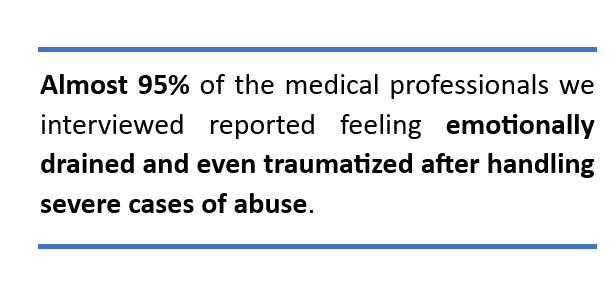 Additionally, the need to remain non-judgmental can be challenging, particularly when healthcare providers are working within a system that lacks sufficient resources to address the complexities of sexual assault cases.
Several doctors described the moral injury they experience in such situations, particularly in facilities that do not provide adequate training or support for medical personnel. In one account, a doctor shared how distressing it was to treat young victims with severe physical injuries caused by assault. These experiences often underscore the broader systemic failures that enable such incidents to occur, leaving doctors feeling helpless. Recognizing the psychological impact of handling these cases is crucial, and hospitals must prioritize mental health support for their staff to prevent burnout and secondary trauma.
-
Security Challenges in Healthcare Settings

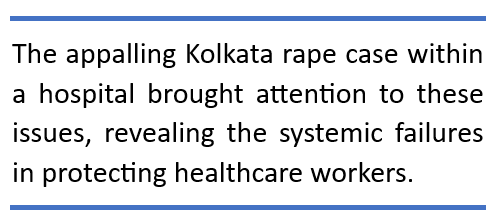
The doctors highlighted severe security shortcomings for healthcare providers themselves, particularly female doctors working night shifts. Security protocols, often merely on paper, fail to protect staff from incidents of harassment and assault.
In our discussions with doctors, they highlighted the critical need for enhanced security measures, including round-the-clock security personnel, dedicated independent security teams, and restricted access zones for both patients and staff. These measures, they stressed, are essential to ensuring a safe and supportive environment within healthcare facilities.
For instance, many government hospitals rely on under-equipped security personnel—sometimes elderly guards who cannot provide effective protection—leaving healthcare providers, especially women, vulnerable to violence. Several doctors expressed their concerns about working long shifts in such conditions, often without proper sleeping quarters or adequate security measures, making them susceptible to harassment and assault. This situation not only jeopardizes the safety of healthcare workers but also impacts the quality of care they provide due to physical and emotional exhaustion.
-
Lack of Redressal Mechanisms

Doctors themselves often lack redressal mechanisms if they become victims of sexual harassment within their workplace. Even when hospitals have policies aligned with the Prevention of Sexual Harassment (PoSH) Act, these are often not communicated or enforced rigorously. This leaves medical professionals vulnerable to harassment and systemic apathy.
Recommendations for Systemic Reform
- Implementing Comprehensive Security Protocols:
Hospitals should employ round-the-clock CCTV surveillance managed by independent agencies to prevent tampering. Restricted access areas, staffed with capable security personnel, are essential to protect both patients and staff.
- Establishing and Enforcing PoSH Committees:
While some corporate and government organizations have implemented Prevention of Sexual Harassment (PoSH) Committees, many hospitals lack these critical structures. Doctors recommend that every healthcare facility, private or public, should establish a PoSH Committee to address and manage complaints effectively.
- Providing Psychological Support for Healthcare Workers:
Doctors themselves require support when dealing with the psychological demands of treating sexual assault victims. Regular counselling sessions and support networks for healthcare providers can help them manage secondary trauma and prevent burnout.
The experiences of these doctors underscore the critical gaps in India’s healthcare system when it comes to ensuring the safety of healthcare providers. By implementing standardized protocols, improving security measures, and fostering a more empathetic cultural response to sexual violence, hospitals can become safer, more supportive spaces for all.
Creating a compassionate, trauma-informed healthcare environment is essential to support healthcare providers and move toward a system where dignity, safety, and respect are guaranteed for everyone.