Inclusive workplaces boost productivity by 30% Learn How
Partner With Us
Flag IN
IN
USA
UK

Is the “Pence Rule” Running Counter to Diversity and Inclusion?

Table of Contents

Author

Kelp

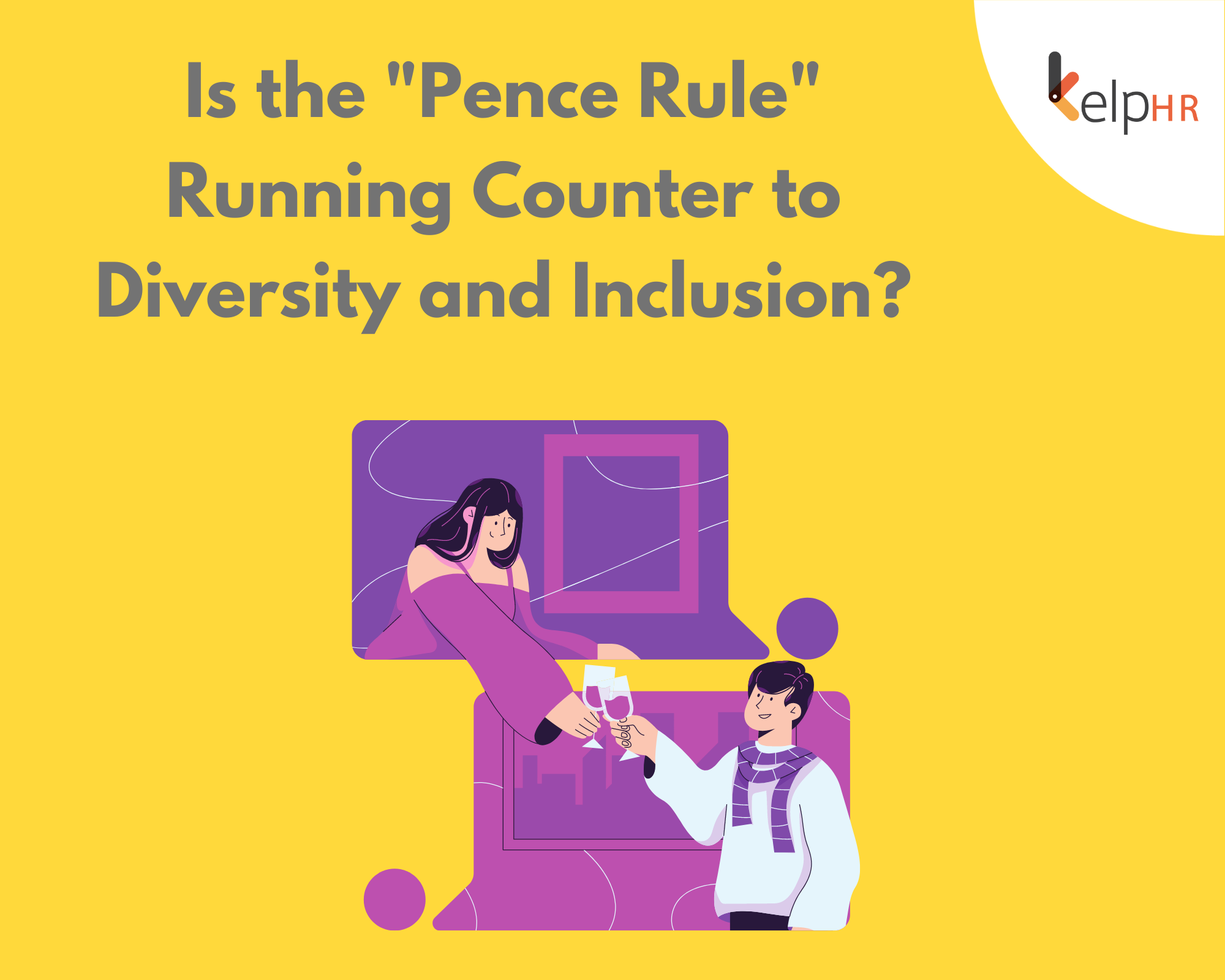
My friend Madhav hosted a dinner for his foreign counterparts visiting India. As his millennial team had had no experience in attending formal get-togethers, he gently guided them to dress and behave suitably. To his pleasant surprise, the team outdid his expectations by dressing immaculately and appropriately engaging the guests, making the party a roaring success. Wanting to get home before late night, most of the female team members left the dinner as soon as the overseas colleagues had left, leaving Madhav and most of the male team members to settle the dinner bill and arrangements. Characteristic of his appreciative demeanor, Madhav, instantly thanked those around him for taking the extra effort of dressing and conducting themselves fittingly. The next day at work, Madhav intended to thank his female team members for taking the effort to dress suitably but felt uneasy. He wasn’t sure if he was required to formally get them together to thank them or do so individually during casual breaks. The more he thought about it, the more hesitant he became. He worried that in the wake of the #MeToo movement, female team members ‘might’ take amiss his well-intentioned and genuine feedback. Not wanting to provide scope for any misunderstanding, he reserved his comments, convincing himself that it was better to ‘err on the side of caution’. In doing so, he knew that he ran the risk of bringing his male team members closer, and alienating his female team members. Like Madhav, employees across the world, have re-evaluated their everyday comments to avoid being misinterpreted as sexual harassment, thanks to the incredible impact of the #MeToo movement on both organizational and individual behavior at the workplace. Yet, one of the unintended fallouts of the #MeToo movement is the further alienation of women from the seat of male power. Not wanting to be embroiled in complaints of sexual harassment, many men in positions of power have now oscillated to the other end of the continuum to keep female employees at arm’s length. For instance, ‘The Pence Rule.’ What is ‘The Pence Rule’? Named after the 48th vice president of the United States, Mike Pence claims to never eat alone with a woman other than his wife. He is said to also not attend events featuring alcohol without her by his side1. It’s negative impact: Men in power with self-imposed rules, safeguard themselves from potential complaints of sexual harassment, at the cost of female workers. However well-intentioned, the Pence Rule:
  • Widens the gap for women to network with men
  • Makes it tougher for women to obtain and work on opportunities with men
  • Unfairly limits women from getting mentored or sponsored by the opposite gender
Men in power, are now wary of spending alone-time with female workers: A key finding of the online survey by LeanIn.Org and SurveyMonkey in 2019 indicates that2:
“Senior-level men are now far more hesitant to spend time with junior women than junior men across a range of basic work activities. They are: 12x more likely to hesitate to have 1-on-1 meetings 9x more likely to hesitate to travel together for work 6x more likely to hesitate to have work dinners.” Also, “36% of men say they’ve avoided mentoring or socializing with a woman because they were nervous about how it would look.”
Across the world, power is still concentrated in the hands of men, and, women need unfettered access to work with them, to be present when key decisions are being made and to find opportunities to grow in their career. For sure, the Pence rule runs counter to diversity and inclusion by excluding women, isolating them, impacting their career progression as well as regress the advances caused by Diversity and Inclusion related initiatives of the last decade.

Recent Posts

Categories

Calendar Icon Events
Close

Event Calendar

JUNE 2026

MO
TU
WE
TH
FR
SA
SU
1
2
3
4
5
6
7
8
9
10
11
12
13
14
15
16
17
18
19
20
21
22
23
24
25
26
27
28
29
30

Head – Client Relations

Gomathi Venkatasubramanian is a seasoned client relations and strategy leader with over nine years of experience in sales, client engagement, and conflict resolution. As the Head of Client Relations, Gomathi and her team ensure that every Kelp client enjoys excellence in service delivery and engagement.  With her vast product knowledge, Gomathi takes pride in being able to go beyond the call to action and provide innovative solutions and services to clients that align with their people and business goals.

Prior to Kelp, Gomathi worked with organizations across the sales and presales cycles thereby acquiring a deep understanding of the process and how to shift from a sales to a solutions mindset.  That has helped her in honing her unique style in building client relations and trust.

Beyond her professional pursuits, Gomathi enjoys traveling and exploring new destinations, embracing different cultures and perspectives. She also finds solace in Indian music, which serves as a source of relaxation and inspiration.


Navneet Chugh

Director & Entrepreneur

Navneet, Managing Partner of Chugh LLP, offers global legal and tax services with 575 employees. An Attorney, CPA, and MBA from USC, he founded SABA and TiE Southern California and serves on multiple boards globally.

Bhaskaran MR

Director & Entrepreneur

Baskaran Rajaraman is an entrepreneur with interests in real estate, healthcare, and eCommerce. He has previously consulted with Krossark, Citrisys, Booz Allen, and Hamilton, and Polaris on BFSI, eCommerce, and logistics.

Manju Manocha

Head - Business Development

Manju, Head of Business Development at Kelp, drives sales strategy and growth. An HR expert with a master’s in Personnel Management, she has worked with Mphasis, BMC, Syntel, and WNS.

Smita Mukharjee

Head – DEI Center of Excellence

Smita is a dynamic and experienced DEI and Learning Consultant with a unique blend of academic expertise and practical application. With an MBA from the University of Mumbai and an M.Phil from the esteemed Tata Institute of Social Sciences, she is currently pursuing a PhD.

Smita brings with her over a decade and a half of experience across both academia and corporate training and has helped shape the learning journeys of professionals across industries. Her expertise spans human behaviour, training and development, research, and organizational diagnostics. Smita’s research has been showcased at prestigious institutions, including IIM Indore, IIM Bangalore, IIM Trichy, and Nirma University..

Passionate about fostering diversity and inclusion, Smita brings an engaging approach to training, blending research-driven insights with interactive methodologies. Beyond her professional commitments, she enjoys exploring new cultures and perspectives through travel, always seeking to broaden her understanding of the world.

Shalu Salwan

Chief Operating Officer

Shalu, an MBA from ISB, leads operations and product development at Kelp, focusing on efficiency and impact. Passionate about L&D, DEI, and PoSH, she thrives on adventure—whether scaling mountains or exploring the ocean.

Elango R

Global Leader

Elango, Global CHRO and Business Head at MphasiS, grew the company from $12 million to over a billion. He led key integrations, integrated CSR practices, and has held leadership roles at Raheja Group, UB Group, and Bank of America.

Rangan Mohan

Veteran Executive Coach

Rangan Mohan, an executive coach with 30 years of experience, has held CEO roles at MphasiS and Hinduja Global Solutions. A graduate of Madras University and IIM Ahmedabad, he is now a director and consultant.

Deepa Padmanaban

Head – Learning Solutions and PoSH Center of Excellence

Deepa, an MBA and Certified PoSH trainer, excels in client experience and HR. At Kelp, she fosters inclusivity through collaboration. Passionate about singing and voice artistry, she also announces for All India Radio.